
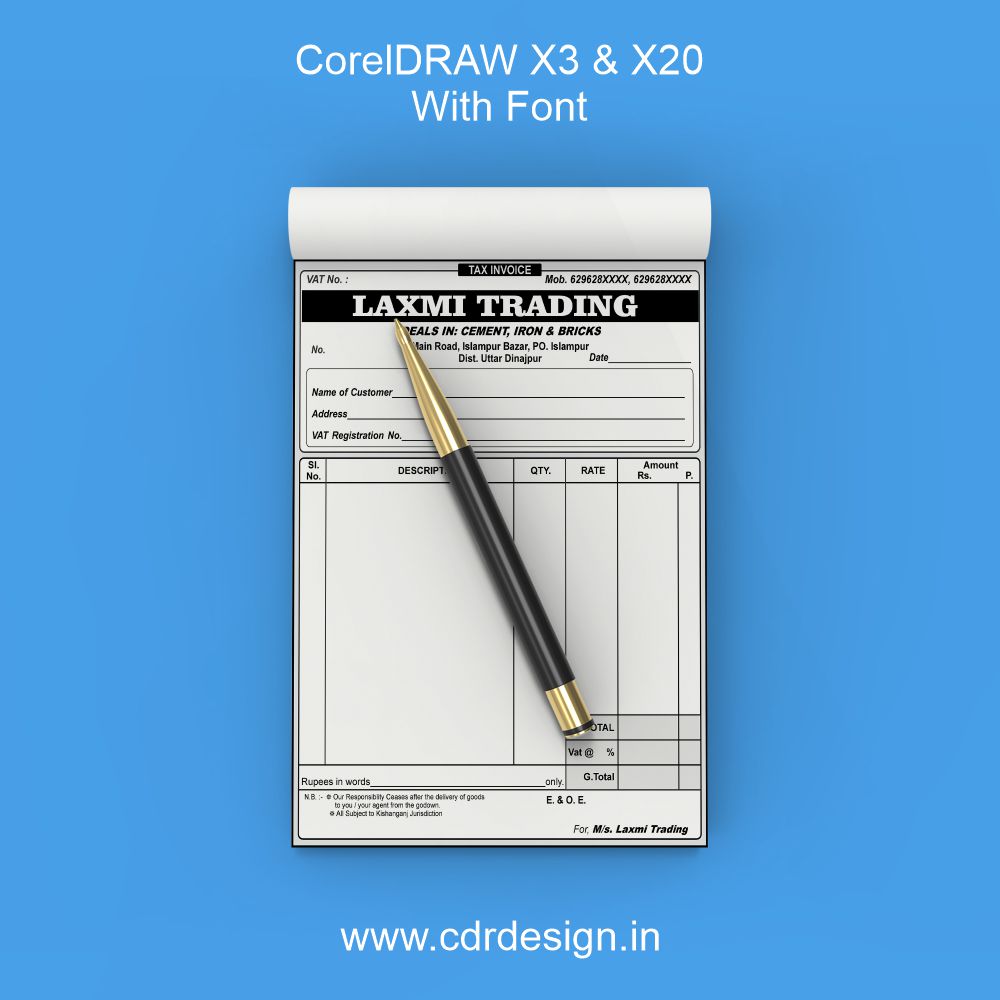


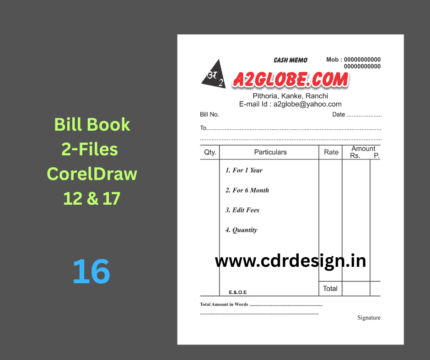
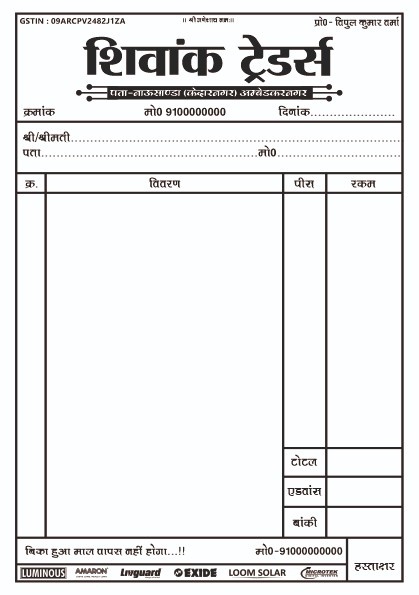
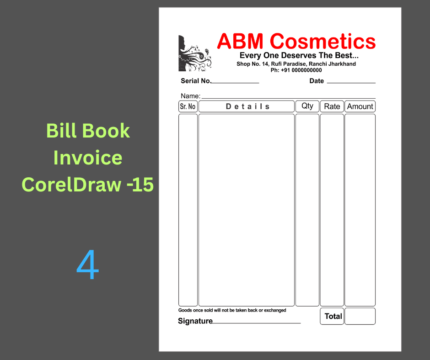
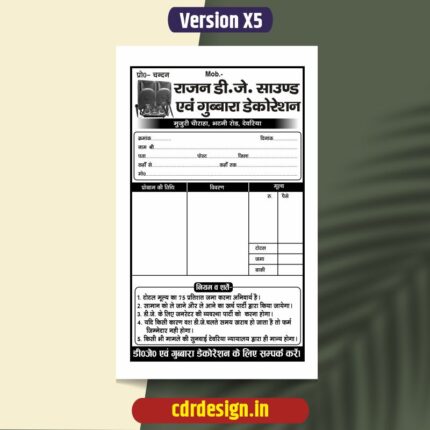
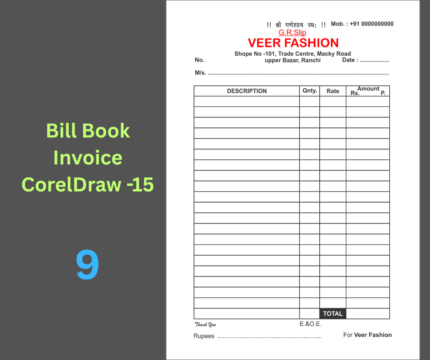
Laxmi Trading Bill Book CDR File
Original price was: ₹49.00.₹29.00Current price is: ₹29.00.
Laxmi Trading Bill Book CDR File
CorelDRAW 13 & 20 Version File
With Font
CDR Version 13 & 20 with Font Fully Editable
Color CMYK
siz 04MB
ये डिजाईन प्रिंटिंग प्रेस वालों के लिए है अगर आपको एडिट करना आता है तभी खरीदें
-
खरीदने से पहले अच्छे से चेक कर लें कौन सी फाइल है, कौन सा वेर्जन है फॉण्ट दिया गया है की नही
- Note: this design is only for the designers not
- for customers. Customization start from Rs.200
- How to Download:
- https://www.youtube.com/
- Instant Download:
- Your files will be available
- to download once payment is confirmed.
- (instant download items don’t accept returns,
- exchanges, or refunds. Please check all details
- before buying.)
-
- Help Number: call or WhatsApp
- Call us: 6296285862 (9 AM to 6 PM)
- CdrDesign License: Use for personal and
- commercial purposes more info
- Copyright Disclaimer:
- This File is uploaded by
- the user. We do not claim any copyright for
- the content. ( If the contents violate your
- copyright, please email us,
- cdrdesign8@gmail.com
- What is in the CDR File? CDR usually stands for Call Detail Record. But in the context of a “Bill Book” for Laxmi Trading, it might contain transaction data, invoice details, customer information, product lists, or a combination thereof. The specific fields in the file are crucial.
- What is Laxmi Trading? Is it a retail business, a wholesale distributor, a manufacturer, etc.? What industry are they in? Knowing their business model helps tailor the article.
- What is the purpose of this article? Who is the intended audience?
- Technical audience (developers, data analysts): Focus on the file structure, data extraction, and potential uses for analysis.
- Business owners/managers of Laxmi Trading: Focus on how to use the data for reporting, inventory management, or customer insights.
- General audience: Focus on a broader story about the company, business data analysis, or digital record keeping.
With more information, I can write a well-crafted article that addresses the topic effectively.
Thank you for reading this post, don't forget to subscribe!Here are some potential article titles and outlines based on different assumptions:
Scenario 1: Assuming “CDR” is simply a file format (like CSV) containing transaction data for Laxmi Trading.
Article Title: Unlocking Sales Insights: Analyzing Laxmi Trading’s Bill Book Data
- Introduction: Briefly introduce Laxmi Trading and the importance of tracking sales data. Mention the use of a digital “Bill Book” (perhaps explaining it’s a digital record of transactions).
- What is in the Bill Book Data (CDR File)? Explain the types of data stored (date, customer, product, price, quantity, etc.). Highlight the value of each field.
- How to Access and Analyze the Data: (This section would vary based on the intended audience)
- For Business Users: Basic techniques for sorting, filtering, and creating simple summaries in spreadsheet software (e.g., Excel, Google Sheets). Show examples of calculating total sales, best-selling products, and identifying top customers.
- For Technical Users: Discuss how to import the CDR file into a database (e.g., MySQL, PostgreSQL) or a data analysis tool (e.g., Python with Pandas, R). Show code snippets for common analytical tasks.
- Potential Insights from the Data: Suggest use cases like:
- Identifying peak sales periods.
- Understanding customer purchase patterns.
- Optimizing inventory levels.
- Identifying potential fraud or errors.
- Conclusion: Summarize the benefits of analyzing the data and encourage Laxmi Trading (or similar businesses) to leverage their digital records for better decision-making.
Scenario 2: Assuming the article is for internal use within Laxmi Trading and focuses on a specific problem.
Article Title: Streamlining Inventory Management with Bill Book Data Analysis
- Introduction: State the problem (e.g., inventory discrepancies, stockouts).
- How the Bill Book Data Can Help: Explain how the data can be used to track product movement, identify slow-moving items, and forecast demand.
- Step-by-Step Guide to Analysis: Provide specific instructions on how to extract data from the CDR file, perform calculations, and generate reports. Include screenshots and examples.
- Example Use Cases: Illustrate how the analysis can help solve real-world problems, such as:
- Reducing waste by avoiding overstocking perishable goods.
- Improving customer satisfaction by ensuring popular items are always in stock.
- Next Steps & Recommendations: Outline future improvements to the data collection process and suggest tools for automation.
Scenario 3: Assuming “CDR” refers to a specific Call Detail Record related to customer interactions (e.g., phone orders).
Article Title: Enhancing Customer Service at Laxmi Trading: Analyzing Call Detail Records from Bill Book Interactions
- Introduction: Introduce how Laxmi Trading takes orders (e.g., phone, online, in-person). Highlight the importance of customer service.
- Understanding Call Detail Records: Explain what information is captured in the CDR (caller ID, call duration, time of call, maybe even notes if integrated with a CRM).
- Linking CDR Data to Bill Book Transactions: Discuss how to connect call records to specific orders to understand the context of the calls.
- Analyzing Call Patterns and Customer Issues: Provide examples of how to identify trends, such as:
- Long call times related to specific products indicating potential confusion.
- Frequent calls about order status indicating a need for better communication.
- Common customer complaints that can inform product or service improvements.
- Improving Customer Service: Suggest actionable steps based on the analysis, such as:
- Providing better product information on the website.
- Training staff to handle common customer inquiries more efficiently.
- Implementing a proactive order tracking system.
To get a more accurate and helpful article, please provide more details about the CDR file and the intended audience








Reviews
There are no reviews yet.